Budget vs. actual that works! Practical recommendations for organizations that want to improve their budget management
A new Finance&Data podcast with Anastasia “Swing” Ben Avi,
a CPA in the finance department of a municipal company owned by a municipality, who specializes in managing, promoting, operating, maintaining and developing professional sports and cultural facilities.
In the podcast we talk about the importance and the need for managing budget data and tracking ongoing budget-vs-actual results in organizations.
We talk about the challenges of budget management, the importance and ways to manage it, which tools are recommended for managing it, whether dedicated systems are needed, and how to integrate the results and outputs into business intelligence systems for ongoing management.
Spotify:
https://open.spotify.com/episode/0UH668yRiPSZtHzzKO2cBP...
RSS:
https://rss.com/podcasts/finance-and-data/1604753/
The importance of accurate budget management in organizations
Budget management is not merely a technical accounting activity, but a first-rate strategic management tool. A budget is in fact the numerical translation of business strategy. When we plan a budget, we translate the organization's vision and goals into numbers and a measurable action plan.
Several significant challenges organizations face in budget management:
Collecting accurate, up-to-date data - one of the main challenges is collecting accurate data in real time from all units of the organization.
Integration between systems - in many organizations different information systems operate that do not communicate with each other automatically.
The gap between planning and execution - the ability to identify gaps between the planned budget and actual performance and respond to them quickly.
Making information accessible to decision makers - presenting budget information clearly and understandably to managers who are not necessarily finance people.
Coping with unexpected changes - budget flexibility in the face of changes in the business environment, as we saw during the COVID period or the war, the missile attacks and the shutdowns of businesses, sectors and regions.
Dedicated budget management systems
In the current era, when data volumes are enormous and the need for fast analysis is critical, relying on basic tools such as Excel alone is not always enough for complex organizations, and it is necessary to consider a dedicated budget system or a combination of business automations and business intelligence tools.
Dedicated systems allow:
Automation of data-collection processes
Real-time alerts on budget deviations
Advanced forecasting capabilities
Budget control at the project / department / whole-organization level
Integrating business intelligence (BI) systems
Using business intelligence systems to analyze budget data enables:
Creating personalized dashboards for different managers
Trend analysis over time
Identifying anomalies in expenses or revenues
Budget forecasting based on statistical models
Producing automatic reports for different levels in the organization
The move from preparing manual Excel reports to a state where information is available immediately on an interactive dashboard changes the way decisions are made in the organization.
A budget-supportive organizational culture
Beyond technological tools, it is important to create an organizational culture that encourages responsible budget management:
Financial transparency - making budget information accessible to all relevant stakeholders.
Distributed responsibility - granting budget responsibility to unit managers, while giving them the tools to manage their budget.
Continuous training - ongoing training for employees at all levels on budget topics.
Collaboration - creating collaboration mechanisms between the finance department and the business units.
An example of budget improvement in an organization
Many organizations experience significant improvement after implementing advanced budget management systems. For example, sports facilities managed by municipal companies can face budget challenges such as:
Rental rates that are not updated regularly
Inefficient energy and electricity consumption
High maintenance costs due to outdated equipment
High maintenance costs due to outdated equipment
Collections and property management
Tender management
Supplier management
Through comprehensive data analysis, data-driven decisions can be made:
Investing in new energy-saving equipment, changing pricing policy, property management, tenders and rent, and improving facility utilization at different hours.
Recommendations for efficient budget management
Several practical recommendations for organizations that want to improve their budget management:
Investing in a suitable technological infrastructure - a dedicated budget management system and BI tools are essential.
Developing orderly work processes - defining clear work processes for budget planning, tracking and variance analysis.
Implementing advanced budgeting methodologies - using methods such as activity-based budgeting (ABC) or rolling budgets.
Focusing on key performance indicators (KPIs) - defining a small number of meaningful performance indicators instead of trying to measure everything.
Developing forecasting capabilities - investing in developing short- and long-term budget forecasting capabilities.
Encouraging open dialogue - enabling open discussion of budget challenges and encouraging ideas for improvement.
Tracking the original budget against the changes made to the budget over the period
Summary
Effective budget management is much more than tables and numbers. It is a strategic process that combines technology, processes and organizational culture. In today's digital era, the ability to analyze budget data in real time, derive insights and respond quickly to change is a significant competitive advantage.
Organizations that embrace an advanced approach to budget management, combining dedicated systems and business intelligence tools, will find themselves in a better position to face the challenges of the changing market and achieve their business goals more effectively.
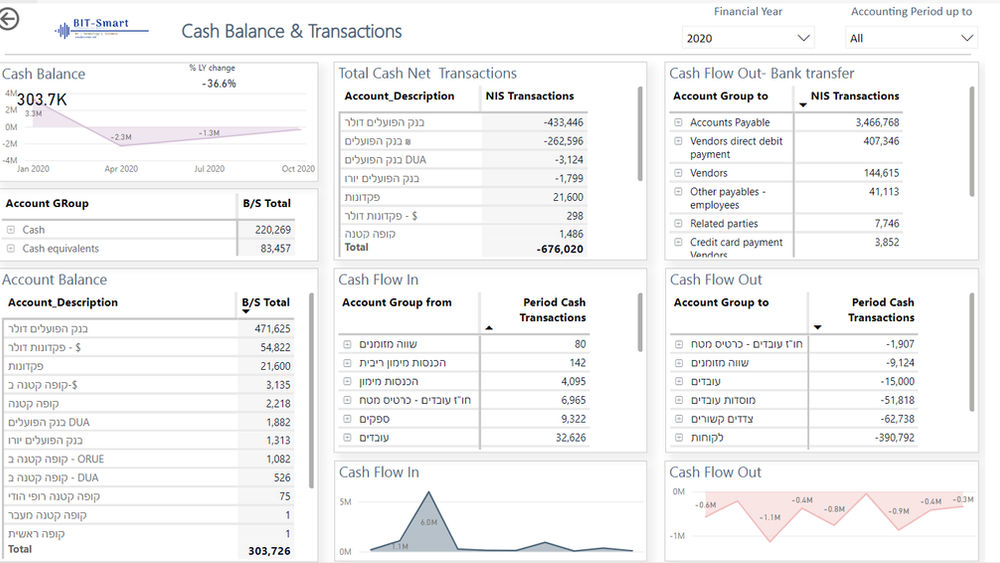
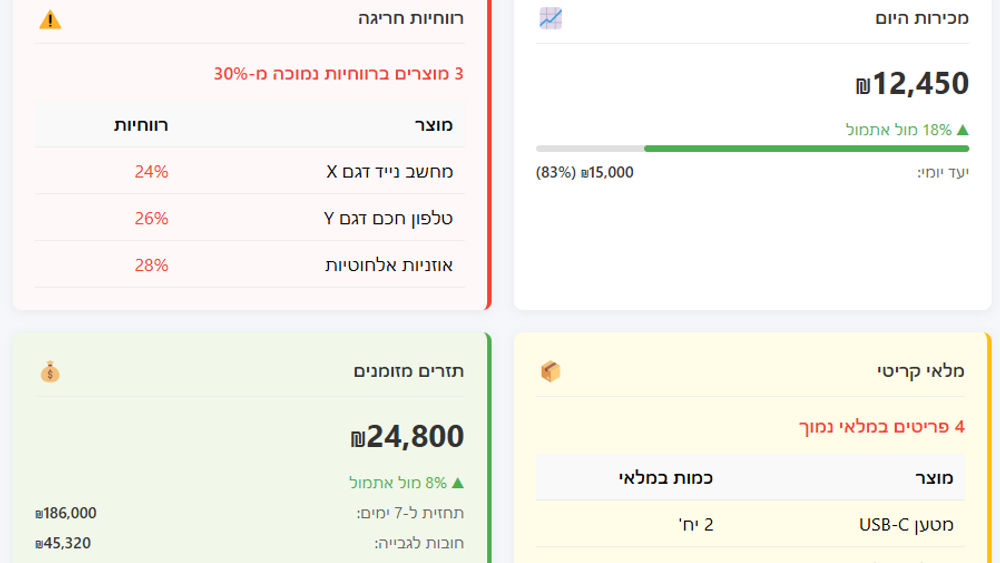
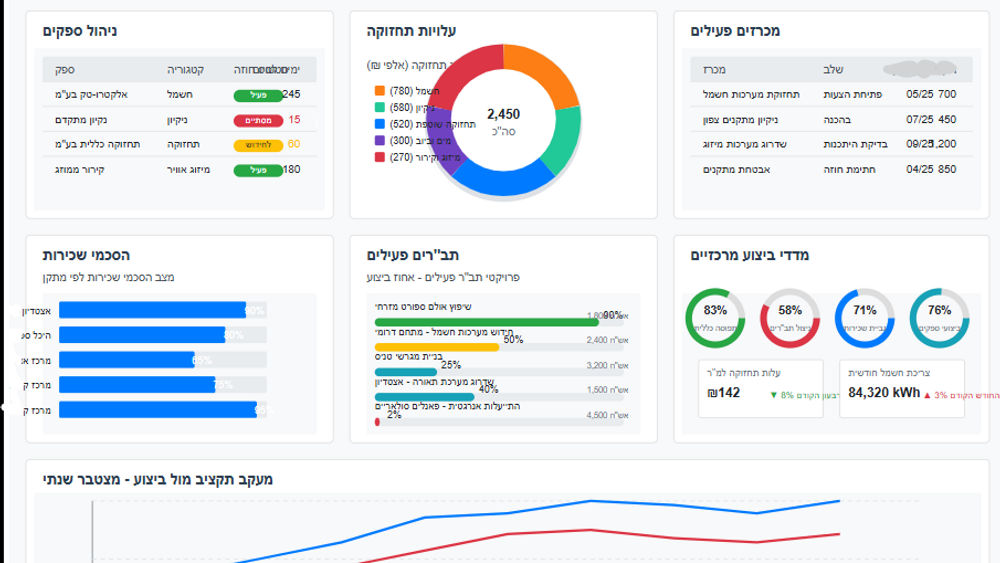
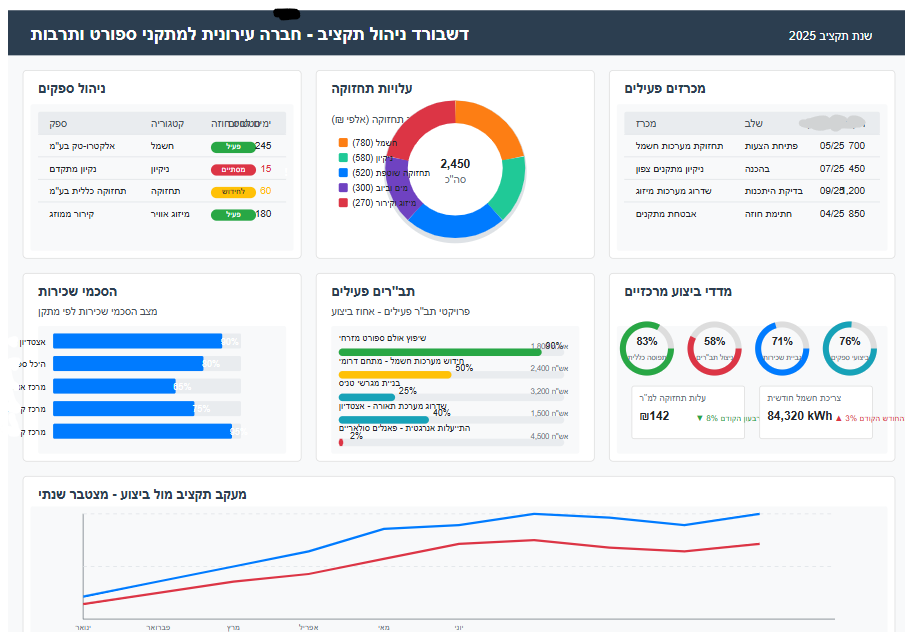
The metrics shown below are for demonstration only and constitute ideas for managers. The dashboard should be adapted to the specific organization's needs and to the relevant management and regulatory requirements. They should also be presented in accordance with visualization and data-accessibility rules.
A link to the podcast episode, enjoy
As usual, anyone who has something to add / comment on / shed light on is welcome to do so in the comments.
If you liked it, share it so others can enjoy too, and keep following us.
Spotify:
https://open.spotify.com/episode/0UH668yRiPSZtHzzKO2cBP...
RSS:
https://rss.com/podcasts/finance-and-data/1604753/

If you got value, like, comment, share, you're welcome to follow and keep supporting the content. Thank you!
#AI#bi#finance https://youtu.be/rIu9yUI6VK0?si=Nci08LnMMo44ZqA3#meditation