Cash-flow management in a business intelligence system: which metrics and data will we need to prepare for the dashboard?
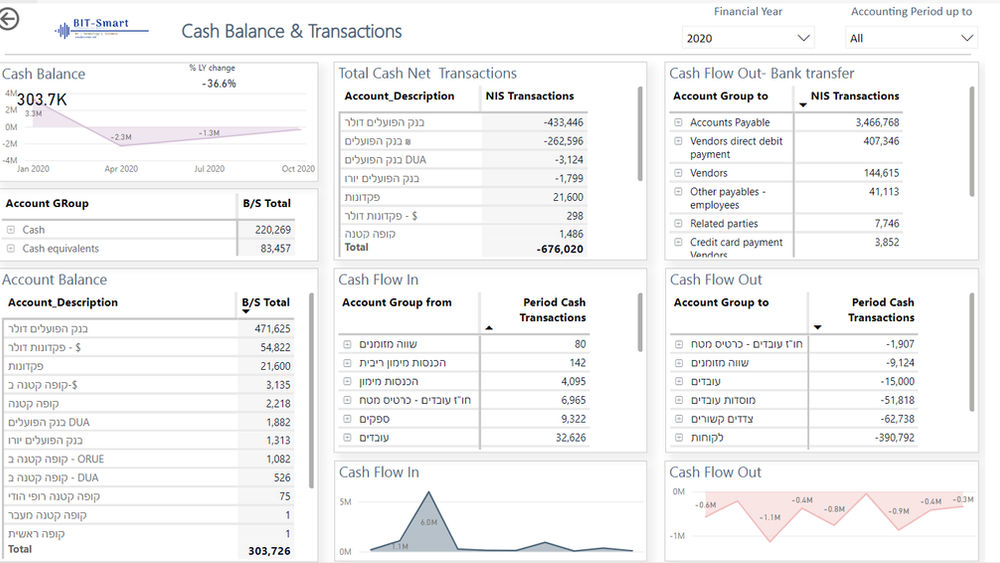
Cash-flow management in a business intelligence system:
Which metrics and data will we need to prepare for the dashboard?
Receipts:
1. Revenue forecast
Expected revenue and change relative to the previous year
Expected revenue and attainment of revenue targets according to budget
2. Opportunities and potential leads by probability
Value of potential leads by likelihood of realization and cash-flow dates
3. Expected receipts
Customer aging and expected cash flow by value of payment maturities (excluding the provision for doubtful debts)
4. Value of open purchase orders not yet supplied
Value of orders and expected delivery and payment according to the contract / agreement with the customer
5. Positive cash flow from activities with banks / realization of investments -
Receiving loans / credit / refunds / redeeming deposits / investments
Payments:
1. Cost forecast
Expected cost and change in ongoing costs relative to the previous year (property tax, payroll, rent...)
Expected cost and attainment of cost targets according to budget
2. Managing variable costs according to expected revenue
3. Expected payments
Supplier aging and expected cash flow by value of payment maturities
4. Value of open purchase orders
Value of orders and expected delivery and payment according to the contract / agreement with the customer
5. Negative cash flow from activities with banks / investments -
Repaying loans / credit / refunds / redeeming deposits / investments
#cashflow #bi #CFO #bitsmart