How do you manage thousands of items in a retail chain without getting lost?
A retail company that sells office supplies ran into a familiar difficulty:
Basic items change all the time -
For example A4 paper purchased from several different manufacturers, disposable cups with a different barcode every month, notebooks, markers and more.
The result:
A system full of duplicate records, a multiplicity of items, inability to analyze trends, inconsistent categories, and inability to truly analyze what was sold and how much.
So what do you do?
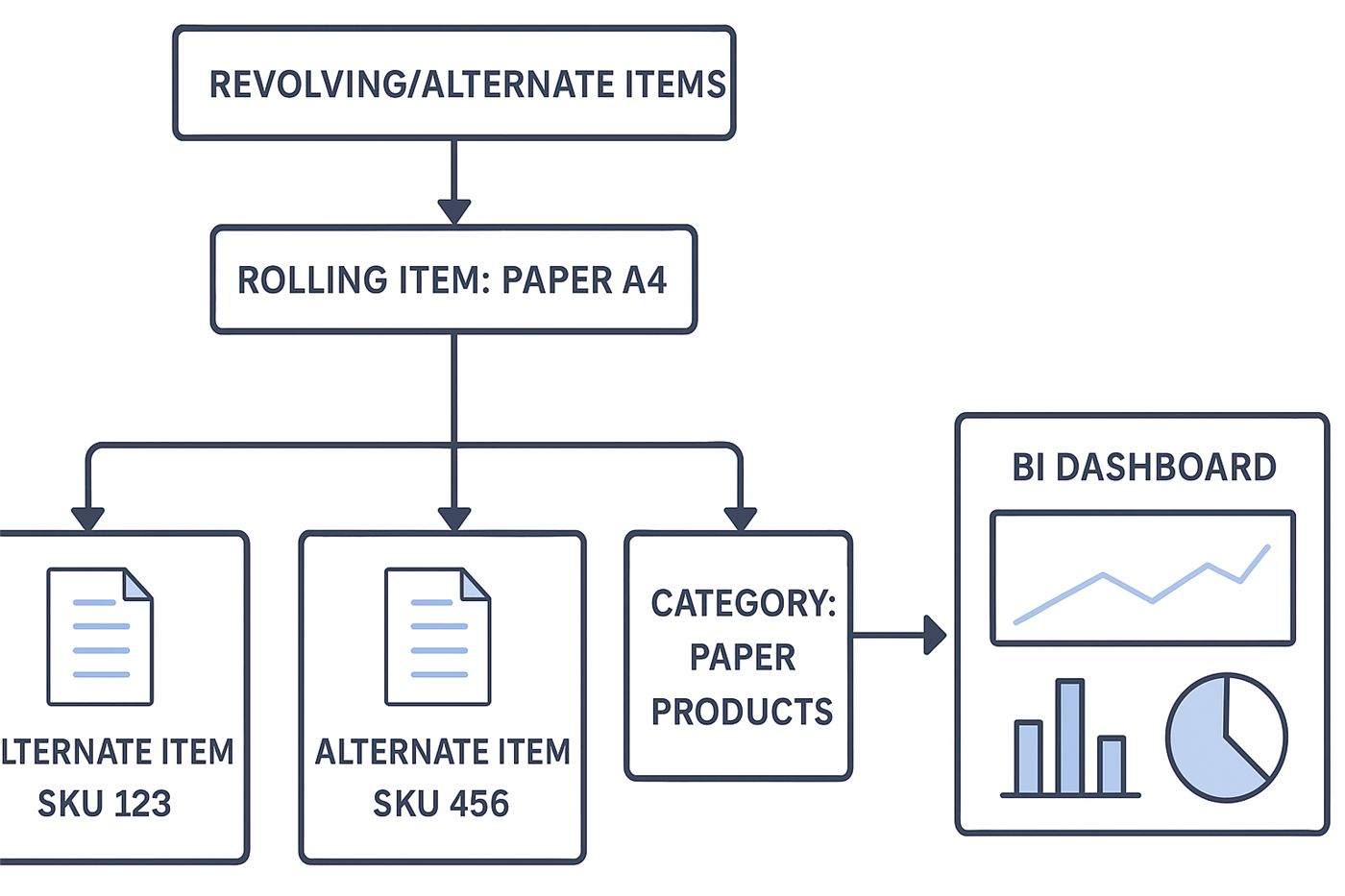
Managing rolling / alternate items (Rolling/Alternate Items):
Unify all the versions of the same product under a "parent item" (for example: A4 paper, chrome paper type), and link all the barcodes and versions to it.
Smart categorization:
Items go into clear categories (paper, writing instruments, kitchenette, technical equipment).
This way you can see profitability not by barcode but by business family.
Using a BI system that consolidates:
Sales analysis by category or rolling item.
Tracking different suppliers / manufacturers for the same product.
Identifying anomalies - a decline in the performance of a particular item or a rise in costs.
Another big bonus - preparing the infrastructure for AI:
Once the information is organized and managed -
you can ask the system natural questions such as:
"What were the total sales of paper products in July, by supplier?"
"Which category grew the fastest this year?"
"Where is the gap between purchasing costs and profitability growing?"
"Which product did we stop buying?"
"Which supplier causes me a high number of returns?"
Without order in the data
the AI will give wrong answers.
With order – it becomes a smart business assistant!
Summary:
Managing rolling items and categories is not just "technical tidying"!
It saves hundreds of work hours, delivers higher profitability, and a strong foundation for a future in which AI is a natural part of day-to-day management.