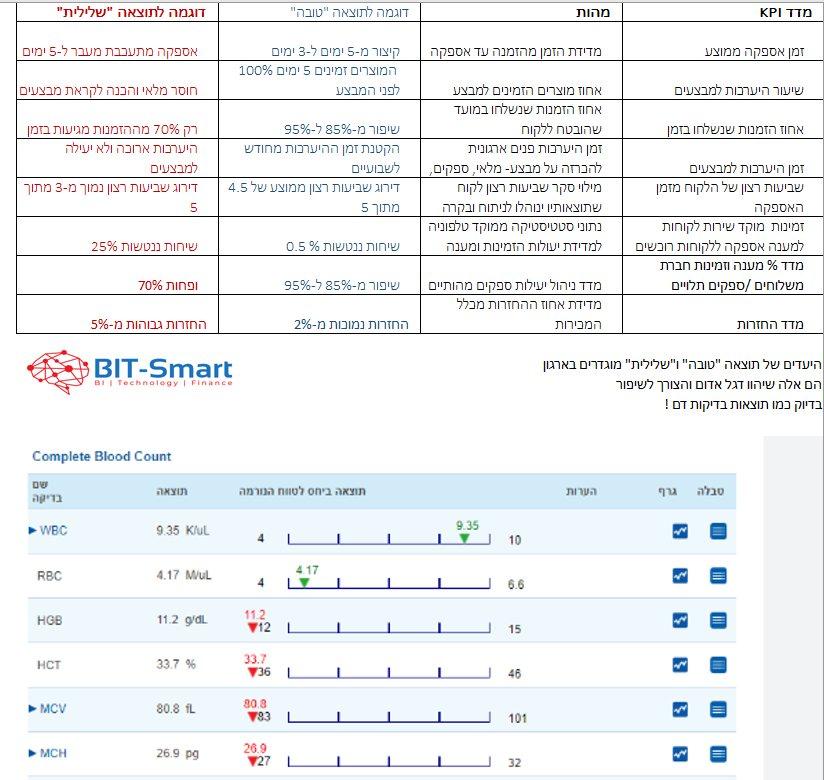
Managing supply metrics is essential to the organization's success, to improving efficiency and to improving customer service.
Improving efficiency:
Supply metrics allow an organization to analyze and improve its supply processes, leading to savings in time and costs.
Proper analysis of these metrics can reveal weak points, waste or inefficiency.
Improving customer service:
Efficient management of supply processes helps ensure available and fast delivery to customers, which improves the customer experience and the company's reputation.
Efficient inventory management:
Supply metrics help manage inventory more efficiently, prevent surplus or shortage, and ensure that the right products are available at the right time.
Coping with market changes:
Monitoring supply metrics can help the organization be flexible and respond quickly to market changes, such as changes in demand or supplier terms.
Informed decision-making:
Accurate and up-to-date metrics provide reliable data for management decisions.
This includes decisions about purchasing materials, production planning and collaborations with suppliers.
Risk reduction:
Good management of supply metrics can help identify and deal with possible risks in the supply chain, such as the risk of dependence on a single supplier or harm to quality.
Forecasting and planning:
Supply metrics can serve as a basis for future forecasts and strategic planning, taking current trends into account and planning for the future.
#KPI#businessmanagement#orders#supply_chain#bitsmart